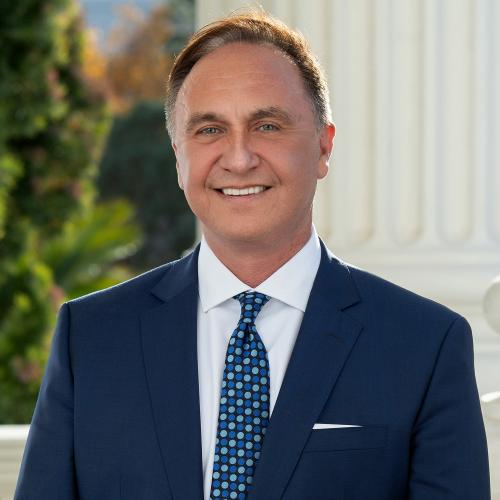
District 51 voters elected Rick Chavez Zbur to the State Assembly in 2022, after a public life that included environmental law, LGBT civil rights and electoral politics. More than a quarter-century earlier, he ran for Congress in a district represented by Republican Steve Horn. Between that race and his Assembly victory, Zbur practiced law, held leadership posts in the California League of Conservation Voters and led Equality California. He is a member of the California Legislative Progressive Caucus. In 2025, he also led Assembly opposition to a proposal to increase housing supply and gave a speech defending single-family exclusive zoning.
ROOTS AND THE JOB BEFORE THE JOB
Zbur was born March 2, 1957, and grew up with his mother, Erlinda Chavez Zbur, on a farm in the Rio Grande Valley of rural New Mexico. He has distant Sephardi Jewish ancestry. His legal career included about three decades practicing environmental law before he retired from Latham & Watkins in 2014.
His work outside the law office included HIV/AIDS advocacy and political fundraising. In the early 1980s, Zbur campaigned against HIV/AIDS and later helped found the Children Affected by AIDS Foundation. In 1992, he organized fundraisers for Bill Clinton and Barbara Boxer; both were elected.
Zbur also became active in California’s environmental movement. From 2011 to 2017, he served as president of the California League of Conservation Voters and as a chair of its board of directors. In 2014, the year he retired from Latham & Watkins, he became executive director of Equality California. He led the LGBT civil rights organization until 2021, part of nearly four decades as a vocal leader in that movement.
THE PATH TO OFFICE
In 1996, Zbur ran for the U.S. House in California’s 38th Congressional District against Republican incumbent Steve Horn. His campaign priorities included environmental protection, Social Security and Medicare. On March 26, Zbur won the Democratic primary, becoming the first openly gay non-incumbent congressional primary candidate to win an election. He lost the general election to Horn.
In April 2020, Zbur said he would run in the 2022 Los Angeles city attorney election. He subsequently decided not to compete for that office. In 2021, he instead announced his candidacy for Assembly District 51.
Zbur won the Assembly primary and then the 2022 general election. His route to the Assembly included a congressional defeat, work in law and advocacy organizations, and a city attorney campaign he later chose not to pursue. He is a member of the California Legislative Progressive Caucus.
THE POLICY SIGNATURE
Zbur’s documented policy work includes environmental protection, HIV/AIDS and LGBT civil rights. That work has included about three decades of environmental law, service as president of the California League of Conservation Voters from 2011 to 2017, helping found the Children Affected by AIDS Foundation, and leadership of Equality California from 2014 to 2021. His 1996 congressional platform also included Social Security and Medicare.
His Assembly record includes a housing intervention. In 2025, Zbur led Assembly opposition to SB 79, bipartisan legislation to increase California’s housing supply, and gave a speech defending single-family exclusive zoning. He is also a member of the California Legislative Progressive Caucus.
Zbur’s public work has included campaigning against HIV/AIDS, helping found the Children Affected by AIDS Foundation, advocating for LGBT civil rights and participating in California’s environmental movement. On housing, he gave a 2025 speech defending single-family exclusive zoning. His record also includes leadership of California organizations, electoral campaigns and service in the State Assembly.
- State Assembly · Assembly District 51 · 2022–present
District 51 voters elected Rick Chavez Zbur to the State Assembly in 2022, after a public life that included environmental law, LGBT civil rights and electoral politics. More than a quarter-century earlier, he ran for Congress in a district represented by Republican Steve Horn. Between that race and his Assembly victory, Zbur practiced law, held leadership posts in the California League of Conservation Voters and led Equality California. He is a member of the California Legislative Progressive Caucus. In 2025, he also led Assembly opposition to a proposal to increase housing supply and gave a speech defending single-family exclusive zoning.
ROOTS AND THE JOB BEFORE THE JOB
Zbur was born March 2, 1957, and grew up with his mother, Erlinda Chavez Zbur, on a farm in the Rio Grande Valley of rural New Mexico. He has distant Sephardi Jewish ancestry. His legal career included about three decades practicing environmental law before he retired from Latham & Watkins in 2014.
His work outside the law office included HIV/AIDS advocacy and political fundraising. In the early 1980s, Zbur campaigned against HIV/AIDS and later helped found the Children Affected by AIDS Foundation. In 1992, he organized fundraisers for Bill Clinton and Barbara Boxer; both were elected.
Zbur also became active in California’s environmental movement. From 2011 to 2017, he served as president of the California League of Conservation Voters and as a chair of its board of directors. In 2014, the year he retired from Latham & Watkins, he became executive director of Equality California. He led the LGBT civil rights organization until 2021, part of nearly four decades as a vocal leader in that movement.
THE PATH TO OFFICE
In 1996, Zbur ran for the U.S. House in California’s 38th Congressional District against Republican incumbent Steve Horn. His campaign priorities included environmental protection, Social Security and Medicare. On March 26, Zbur won the Democratic primary, becoming the first openly gay non-incumbent congressional primary candidate to win an election. He lost the general election to Horn.
In April 2020, Zbur said he would run in the 2022 Los Angeles city attorney election. He subsequently decided not to compete for that office. In 2021, he instead announced his candidacy for Assembly District 51.
Zbur won the Assembly primary and then the 2022 general election. His route to the Assembly included a congressional defeat, work in law and advocacy organizations, and a city attorney campaign he later chose not to pursue. He is a member of the California Legislative Progressive Caucus.
THE POLICY SIGNATURE
Zbur’s documented policy work includes environmental protection, HIV/AIDS and LGBT civil rights. That work has included about three decades of environmental law, service as president of the California League of Conservation Voters from 2011 to 2017, helping found the Children Affected by AIDS Foundation, and leadership of Equality California from 2014 to 2021. His 1996 congressional platform also included Social Security and Medicare.
His Assembly record includes a housing intervention. In 2025, Zbur led Assembly opposition to SB 79, bipartisan legislation to increase California’s housing supply, and gave a speech defending single-family exclusive zoning. He is also a member of the California Legislative Progressive Caucus.
Zbur’s public work has included campaigning against HIV/AIDS, helping found the Children Affected by AIDS Foundation, advocating for LGBT civil rights and participating in California’s environmental movement. On housing, he gave a 2025 speech defending single-family exclusive zoning. His record also includes leadership of California organizations, electoral campaigns and service in the State Assembly.
The record
5,977 events, each with its sourceAB 113 GABRIEL Concurrence in Senate Amendments
AB 1128 Muratsuchi Concurrence in Senate Amendments
SB 931 Grove Third Reading Urgency By Krell
AB 28 Schiavo Concurrence in Senate Amendments
AB 187 BUDGET Concurrence in Senate Amendments By GABRIEL
AB 190 BUDGET Concurrence in Senate Amendments By GABRIEL
AB 192 BUDGET Concurrence in Senate Amendments By GABRIEL
AB 353 BOERNER Concurrence in Senate Amendments
AB 605 Muratsuchi Concurrence in Senate Amendments
AB 611 LEE Concurrence in Senate Amendments
AB 664 Alvarez Concurrence in Senate Amendments
AB 760 Ta Concurrence in Senate Amendments
AB 817 GONZÁLEZ, M. Concurrence in Senate Amendments
AB 904 Aguiar-Curry Concurrence in Senate Amendments
AB 1099 Bryan Concurrence in Senate Amendments
AB 1156 WICKS Concurrence in Senate Amendments
AB 1159 Addis Concurrence in Senate Amendments
AB 1199 Patterson Concurrence in Senate Amendments
AB 1294 Haney Concurrence in Senate Amendments
AB 1301 PETRIE-NORRIS Concurrence in Senate Amendments
AB 1307 Ávila Farías Concurrence in Senate Amendments
AB 1331 Elhawary Concurrence in Senate Amendments
AB 1349 BRYAN Concurrence in Senate Amendments Move The Previous Question By AGUIAR-CURRY
AB 1349 BRYAN Concurrence in Senate Amendments
AB 1546 SCHULTZ Concurrence in Senate Amendments
AB 1575 Arambula Concurrence in Senate Amendments
AB 1609 Zbur Concurrence in Senate Amendments
AB 1642 HARABEDIAN Concurrence in Senate Amendments
AB 1646 Bryan Concurrence in Senate Amendments
AB 1680 Calderon Concurrence in Senate Amendments
AB 1707 Davies Concurrence in Senate Amendments
AB 1709 Lowenthal Concurrence in Senate Amendments
AB 1795 GIPSON Concurrence in Senate Amendments
AB 1813 Ward Concurrence in Senate Amendments
AB 1816 Davies Concurrence in Senate Amendments
AB 1841 Ramos Concurrence in Senate Amendments
AB 1871 Fong Concurrence in Senate Amendments
AB 1896 GONZÁLEZ, M. Concurrence in Senate Amendments
AB 1969 BONTA Concurrence in Senate Amendments
AB 1976 Wicks Concurrence in Senate Amendments
AB 1981 Aguiar-Curry Concurrence in Senate Amendments
AB 2012 Hoover Concurrence in Senate Amendments
AB 2020 Gabriel Concurrence in Senate Amendments
AB 2047 Bauer-Kahan Concurrence in Senate Amendments
AB 2059 Wilson Concurrence in Senate Amendments
AB 2061 Chen Concurrence in Senate Amendments
AB 2065 Petrie-Norris Concurrence in Senate Amendments
AB 2071 Hoover Concurrence in Senate Amendments
AB 2086 Ellis Concurrence in Senate Amendments
AB 2103 Irwin Concurrence in Senate Amendments