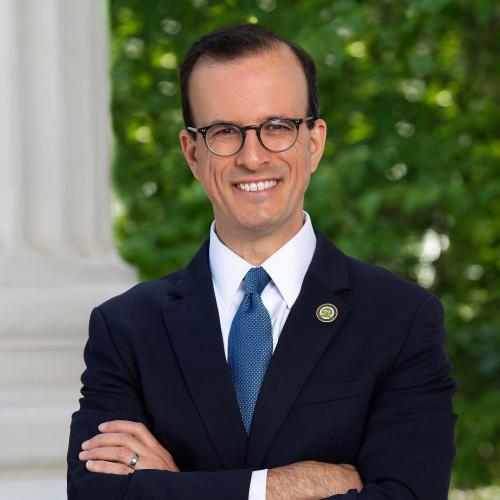
Marc Berman was raised in Palo Alto, where he graduated from Palo Alto High School and served as student body president; he later served on the Palo Alto City Council and has served in the California State Assembly since 2016. A lawyer, he represents the 23rd Assembly District, encompassing parts of the San Francisco Peninsula and Silicon Valley. He is a member of the California Legislative Progressive Caucus and has taken a pro-housing position that contrasts with the approach of other Palo Alto politicians. His enacted legislation has also addressed manipulated political media and California’s recall process. His record includes both housing policy and rules governing elections and recalls.
BACKGROUND AND FORMATION
Berman was born in Dallas on Oct. 31, 1980, and raised in Palo Alto. At Palo Alto High School, he served as student body president. He earned a bachelor’s degree in political science from Georgetown University in 2002 and later a law degree from the USC Gould School of Law.
While in college, Berman worked in Congresswoman Anna Eshoo’s office and as an analyst in the U.S. Department of Justice Civil Rights Division. After law school, he practiced at Latham & Watkins and Merino Yebri, LLP.
His legal work included pro bono representation for clients seeking protection under the Violence Against Women Act and for people seeking asylum from the Democratic Republic of the Congo. His education and work also included political science, law school, a congressional office, the Justice Department and two law firms. Berman is Jewish.
THE CAREER
Berman served on the Palo Alto City Council before his election to the Assembly. He has remained in the Legislature since 2016 and represents a district encompassing parts of the San Francisco Peninsula and Silicon Valley.
During the redistricting cycle following the 2020 census, Berman and fellow Assemblymember Evan Low were drawn into the same district. Low moved to a neighboring district, averting a primary between the two incumbents. Berman continued representing the 23rd District.
His legislative work has included rules for campaigns and elections. In 2019, he introduced legislation to ban the knowing and malicious distribution of manipulated videos and pictures, commonly called “deepfakes,” that falsely depict the acts or words of a political candidate within 60 days of an election, unless the material includes a disclaimer disclosing that it contains manipulated content. The measure passed the Legislature and was signed into law by Gov. Gavin Newsom.
In 2022, Berman introduced AB 2584, changing California’s recall process. The governor signed it that September. The law raised the number of signatures required on a notice of intention to recall, required public inspection of recall petitions during the 10-day period in which the election office determines whether a petition can be approved for circulation, and allowed a recall election to be consolidated with a regular election scheduled within 180 days after the petition qualified for the ballot.
THE POLICY SIGNATURE
Berman has supported policies intended to encourage housing production in response to California’s housing shortage. His stance contrasts with that of other politicians from Palo Alto who favor policies that slow housing production. He served on the Palo Alto City Council before being elected to the Assembly.
His legislative work also includes measures concerning the terms under which political contests are conducted. The 2019 deepfakes law addressed knowingly and maliciously distributed manipulated images and videos that falsely depict a political candidate’s acts or words within 60 days of an election, while providing an exception for material accompanied by a manipulation disclaimer. AB 2584 raised the signature threshold for a notice of intention to recall, required public inspection of recall petitions during the approval period and allowed recall elections to be consolidated with certain regular elections.
AB 2584 was cited in a city dispute in 2023. That May, the Yucaipa city clerk filed a lawsuit seeking to remove statements described as false from a citizen-initiated petition to recall the mayor and two City Council members. The clerk cited state law, including AB 2584, as allowing the removal of false or misleading statements. The city later offered the recall proponents a settlement to dismiss the lawsuit, but the proposal was rejected in September.
Berman’s documented record includes support for policies intended to encourage housing production, legislation governing manipulated campaign media, and changes to recall notices, petition inspection and election scheduling.
- State Assembly · Assembly District 24 · former
- State Assembly · Assembly District 23 · 2022–present
Marc Berman was raised in Palo Alto, where he graduated from Palo Alto High School and served as student body president; he later served on the Palo Alto City Council and has served in the California State Assembly since 2016. A lawyer, he represents the 23rd Assembly District, encompassing parts of the San Francisco Peninsula and Silicon Valley. He is a member of the California Legislative Progressive Caucus and has taken a pro-housing position that contrasts with the approach of other Palo Alto politicians. His enacted legislation has also addressed manipulated political media and California’s recall process. His record includes both housing policy and rules governing elections and recalls.
BACKGROUND AND FORMATION
Berman was born in Dallas on Oct. 31, 1980, and raised in Palo Alto. At Palo Alto High School, he served as student body president. He earned a bachelor’s degree in political science from Georgetown University in 2002 and later a law degree from the USC Gould School of Law.
While in college, Berman worked in Congresswoman Anna Eshoo’s office and as an analyst in the U.S. Department of Justice Civil Rights Division. After law school, he practiced at Latham & Watkins and Merino Yebri, LLP.
His legal work included pro bono representation for clients seeking protection under the Violence Against Women Act and for people seeking asylum from the Democratic Republic of the Congo. His education and work also included political science, law school, a congressional office, the Justice Department and two law firms. Berman is Jewish.
THE CAREER
Berman served on the Palo Alto City Council before his election to the Assembly. He has remained in the Legislature since 2016 and represents a district encompassing parts of the San Francisco Peninsula and Silicon Valley.
During the redistricting cycle following the 2020 census, Berman and fellow Assemblymember Evan Low were drawn into the same district. Low moved to a neighboring district, averting a primary between the two incumbents. Berman continued representing the 23rd District.
His legislative work has included rules for campaigns and elections. In 2019, he introduced legislation to ban the knowing and malicious distribution of manipulated videos and pictures, commonly called “deepfakes,” that falsely depict the acts or words of a political candidate within 60 days of an election, unless the material includes a disclaimer disclosing that it contains manipulated content. The measure passed the Legislature and was signed into law by Gov. Gavin Newsom.
In 2022, Berman introduced AB 2584, changing California’s recall process. The governor signed it that September. The law raised the number of signatures required on a notice of intention to recall, required public inspection of recall petitions during the 10-day period in which the election office determines whether a petition can be approved for circulation, and allowed a recall election to be consolidated with a regular election scheduled within 180 days after the petition qualified for the ballot.
THE POLICY SIGNATURE
Berman has supported policies intended to encourage housing production in response to California’s housing shortage. His stance contrasts with that of other politicians from Palo Alto who favor policies that slow housing production. He served on the Palo Alto City Council before being elected to the Assembly.
His legislative work also includes measures concerning the terms under which political contests are conducted. The 2019 deepfakes law addressed knowingly and maliciously distributed manipulated images and videos that falsely depict a political candidate’s acts or words within 60 days of an election, while providing an exception for material accompanied by a manipulation disclaimer. AB 2584 raised the signature threshold for a notice of intention to recall, required public inspection of recall petitions during the approval period and allowed recall elections to be consolidated with certain regular elections.
AB 2584 was cited in a city dispute in 2023. That May, the Yucaipa city clerk filed a lawsuit seeking to remove statements described as false from a citizen-initiated petition to recall the mayor and two City Council members. The clerk cited state law, including AB 2584, as allowing the removal of false or misleading statements. The city later offered the recall proponents a settlement to dismiss the lawsuit, but the proposal was rejected in September.
Berman’s documented record includes support for policies intended to encourage housing production, legislation governing manipulated campaign media, and changes to recall notices, petition inspection and election scheduling.
The record
4,868 events, each with its sourceAB 113 GABRIEL Concurrence in Senate Amendments
AB 1128 Muratsuchi Concurrence in Senate Amendments
SB 931 Grove Third Reading Urgency By Krell
AB 28 Schiavo Concurrence in Senate Amendments
AB 187 BUDGET Concurrence in Senate Amendments By GABRIEL
AB 190 BUDGET Concurrence in Senate Amendments By GABRIEL
AB 192 BUDGET Concurrence in Senate Amendments By GABRIEL
AB 353 BOERNER Concurrence in Senate Amendments
AB 605 Muratsuchi Concurrence in Senate Amendments
AB 611 LEE Concurrence in Senate Amendments
AB 664 Alvarez Concurrence in Senate Amendments
AB 760 Ta Concurrence in Senate Amendments
AB 817 GONZÁLEZ, M. Concurrence in Senate Amendments
AB 904 Aguiar-Curry Concurrence in Senate Amendments
AB 1099 Bryan Concurrence in Senate Amendments
AB 1156 WICKS Concurrence in Senate Amendments
AB 1159 Addis Concurrence in Senate Amendments
AB 1199 Patterson Concurrence in Senate Amendments
AB 1294 Haney Concurrence in Senate Amendments
AB 1301 PETRIE-NORRIS Concurrence in Senate Amendments
AB 1307 Ávila Farías Concurrence in Senate Amendments
AB 1331 Elhawary Concurrence in Senate Amendments
AB 1349 BRYAN Concurrence in Senate Amendments Move The Previous Question By AGUIAR-CURRY
AB 1349 BRYAN Concurrence in Senate Amendments
AB 1546 SCHULTZ Concurrence in Senate Amendments
AB 1575 Arambula Concurrence in Senate Amendments
AB 1609 Zbur Concurrence in Senate Amendments
AB 1642 HARABEDIAN Concurrence in Senate Amendments
AB 1646 Bryan Concurrence in Senate Amendments
AB 1680 Calderon Concurrence in Senate Amendments
AB 1707 Davies Concurrence in Senate Amendments
AB 1709 Lowenthal Concurrence in Senate Amendments
AB 1795 GIPSON Concurrence in Senate Amendments
AB 1813 Ward Concurrence in Senate Amendments
AB 1816 Davies Concurrence in Senate Amendments
AB 1841 Ramos Concurrence in Senate Amendments
AB 1871 Fong Concurrence in Senate Amendments
AB 1896 GONZÁLEZ, M. Concurrence in Senate Amendments
AB 1969 BONTA Concurrence in Senate Amendments
AB 1976 Wicks Concurrence in Senate Amendments
AB 1981 Aguiar-Curry Concurrence in Senate Amendments
AB 2012 Hoover Concurrence in Senate Amendments
AB 2020 Gabriel Concurrence in Senate Amendments
AB 2047 Bauer-Kahan Concurrence in Senate Amendments
AB 2059 Wilson Concurrence in Senate Amendments
AB 2061 Chen Concurrence in Senate Amendments
AB 2065 Petrie-Norris Concurrence in Senate Amendments
AB 2071 Hoover Concurrence in Senate Amendments
AB 2086 Ellis Concurrence in Senate Amendments
AB 2103 Irwin Concurrence in Senate Amendments